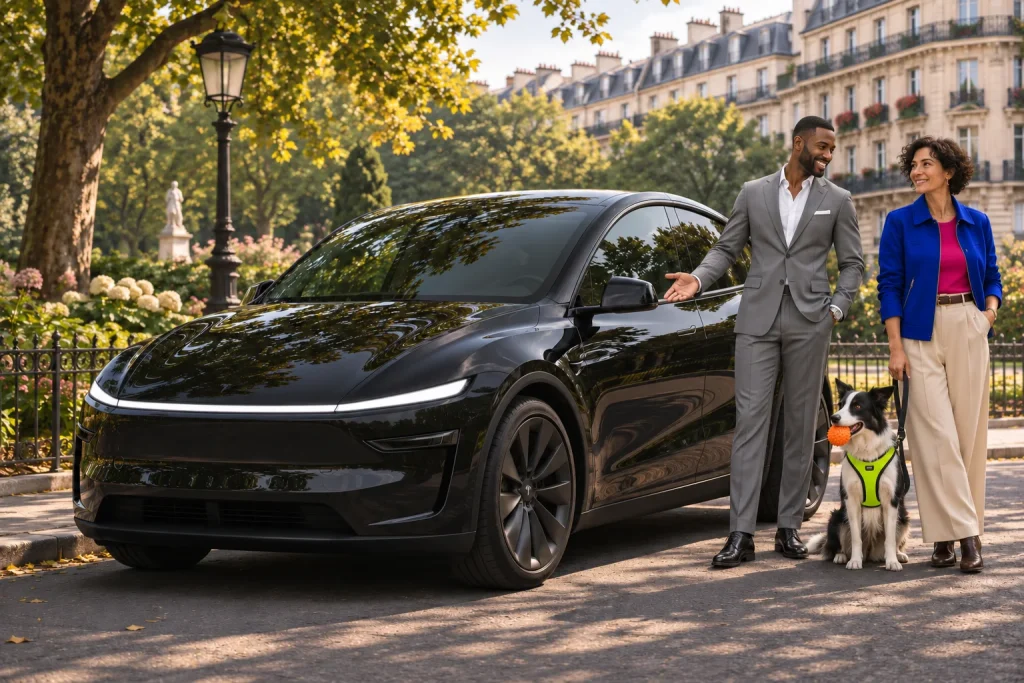
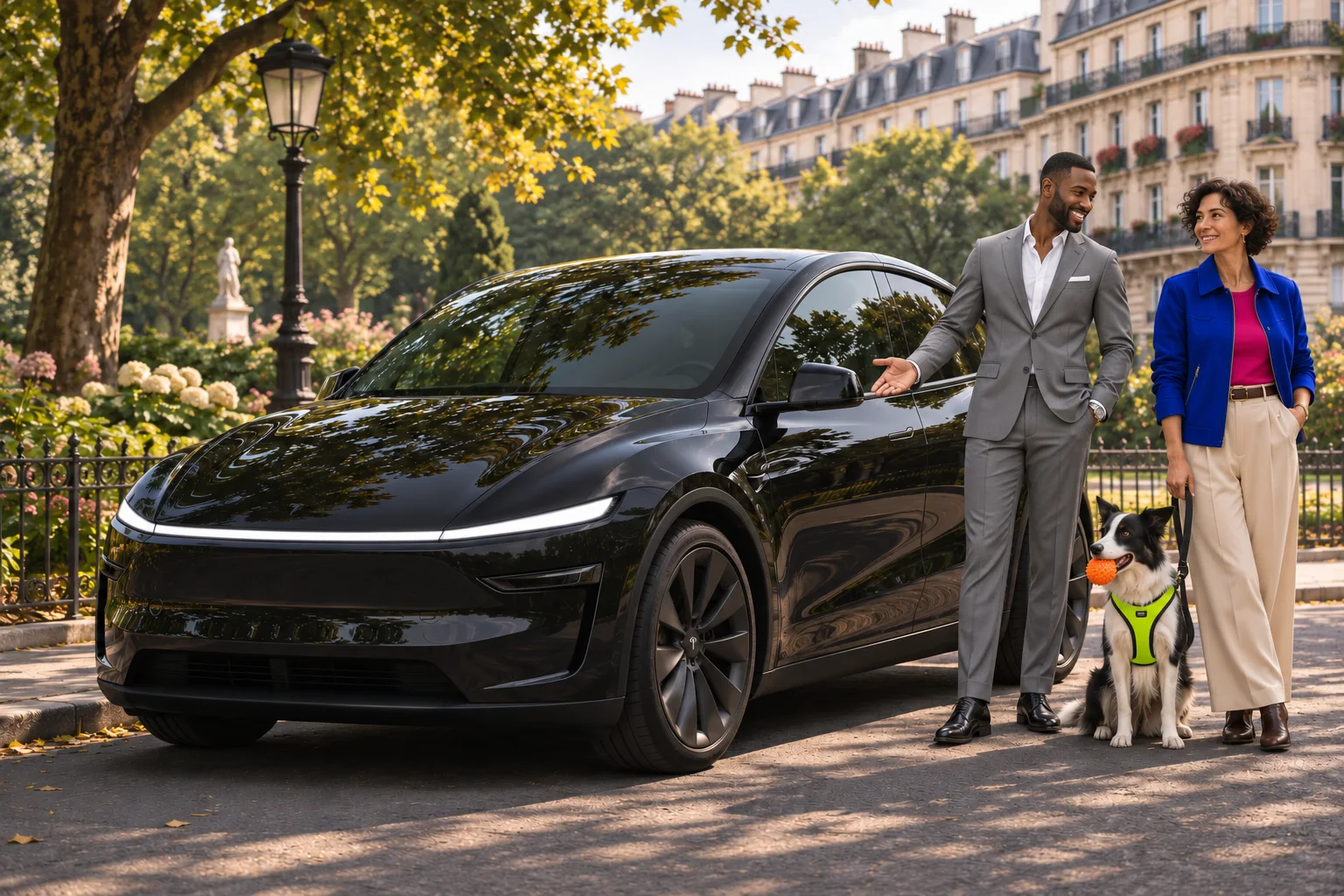
Choosing a pet taxi vehicle takes more than comparing badges. Where will your companion travel? Must the crate stay assembled? How many seats and suitcases do you need? Explore our pet taxi service in Paris and use these practical points to prepare your journey.
01 · Space planned around your journey
Which pet taxi vehicle should you choose?
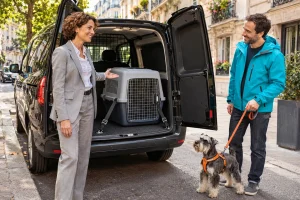
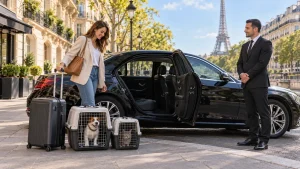
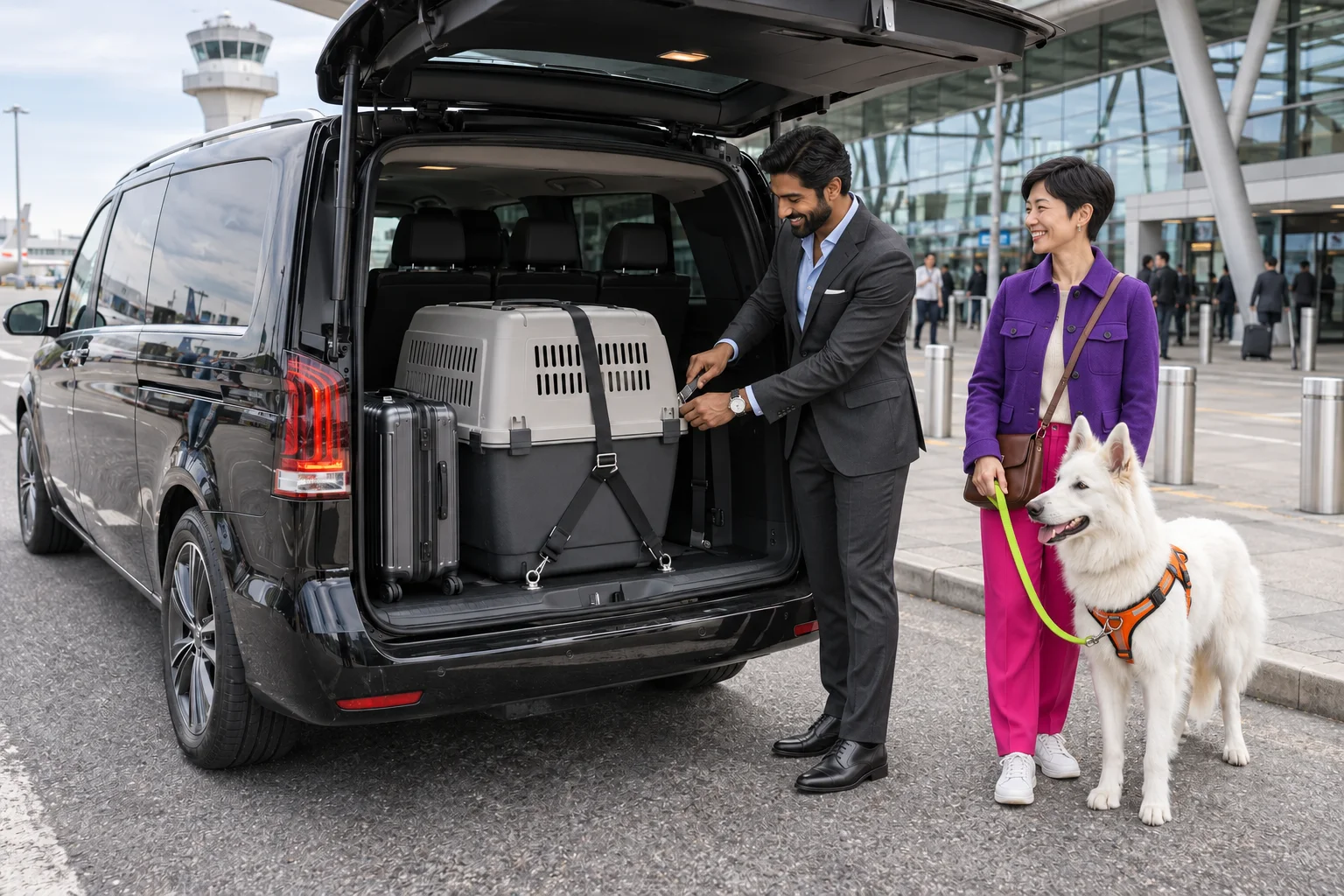
A pet taxi vehicle needs to provide a suitable space for the animal while leaving real room for passengers and their belongings. This pet transport vehicle is chosen around the complete load: a dog with one person and a suitcase needs different arrangements from two cats in carriers, a family and luggage for a flight.
Pet-friendly chauffeur service: you travel with your companion
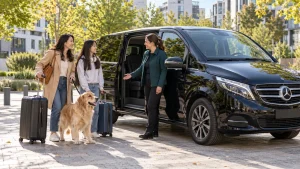
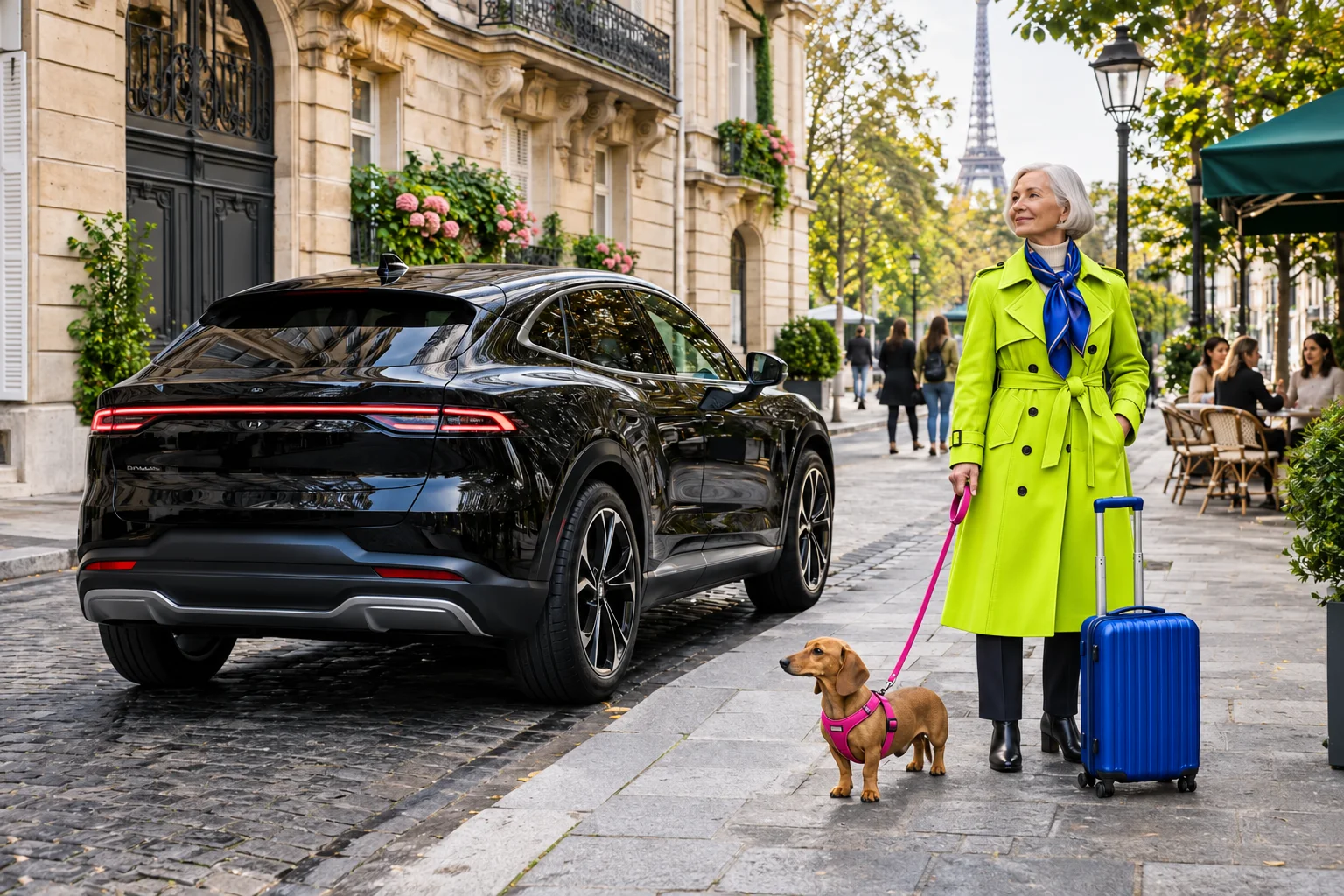
Our pet-friendly chauffeur service lets you stay with your companion. A car for dogs of small or medium size, or a car for cats in closed carriers, may suit the journey when passengers and luggage leave enough room. Our pet transport service in Paris is planned around that arrangement.
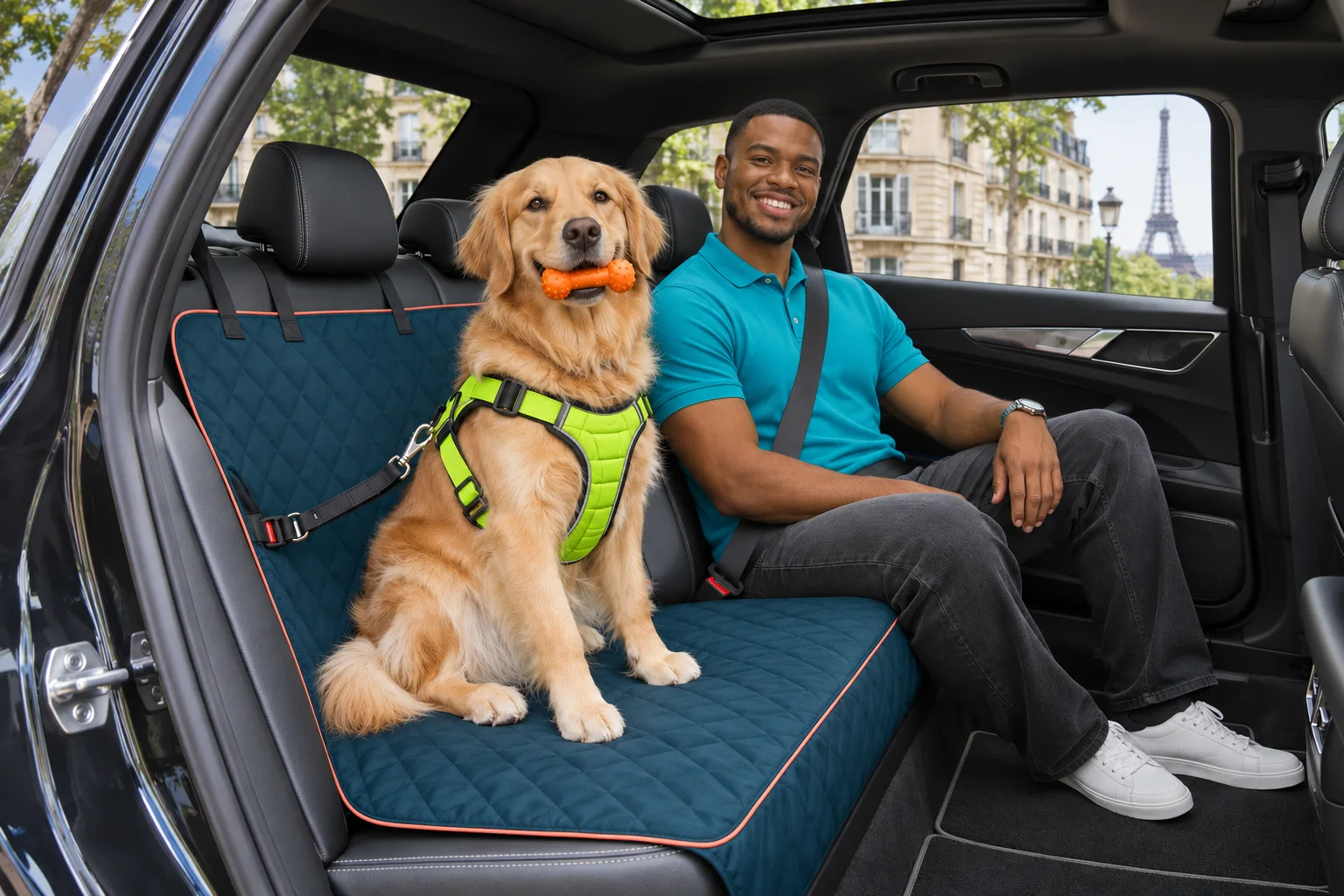
In a car for pets, protective covers, temperature and smooth driving matter alongside appearance. The dog’s restraint is agreed before travel; travelling outside a crate is not guaranteed in every situation. A cat stays in a closed, ventilated carrier or travel bag.
Unaccompanied pet transport
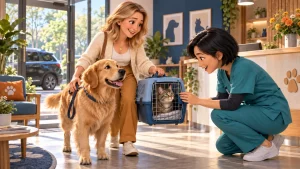
Unaccompanied pet transport is planned separately: the carrier, instructions and people present at collection and delivery are agreed in advance. The vehicle for pets is chosen around the species, size and journey needs. Owners entrusting us with a dog can also explore our dog taxi service.
In our booking categories, Taxi animalier refers to the animal travelling without its owner; chauffeur-driven pet transport carries the owner too. This distinction helps us prepare the right service.
The models below illustrate vehicles offered on the market. Their inclusion does not guarantee that a particular model will be assigned to your booking.
02 · Pet-friendly cars and SUVs
Car for pets: how much room does your journey need?
Tesla Model Y: a boot worth considering
When choosing a pet taxi vehicle, the Tesla Model Y illustrates a loading arrangement worth examining. Its rear hatch and rear storage allow luggage-and-carrier configurations to be considered, while additional belongings can go in the front boot. The front boot is for belongings, never for the animal.
The usable space in a car for dogs depends on the version and available seats. Folding seats creates room for crates but removes passenger places. A pet-friendly vehicle must have an opening and loading height that suit the carrier: a large boot alone cannot confirm that an XXL crate fits.
XPENG G6: passenger comfort and a versatile boot
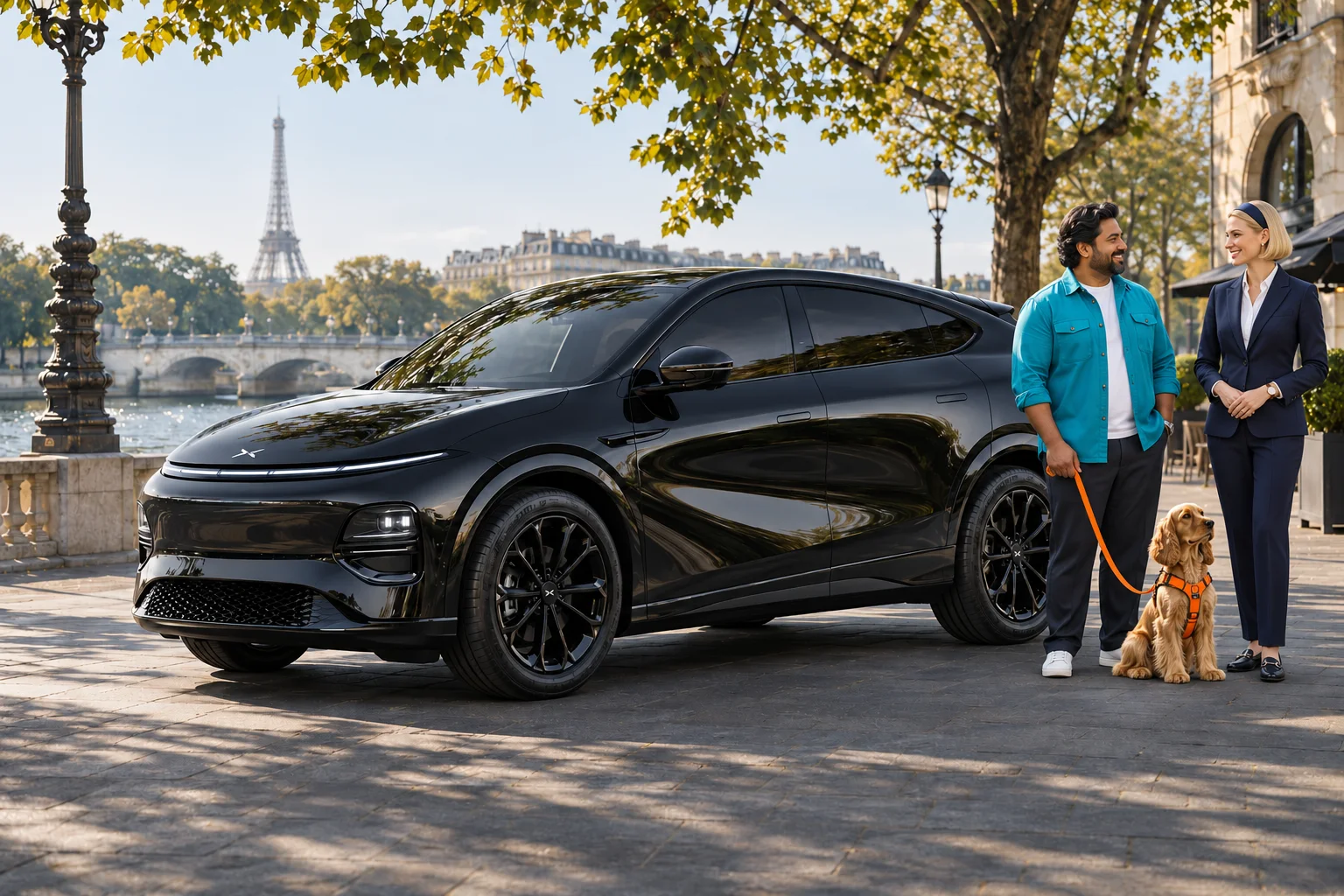
The XPENG G6 is offered in France with a comfort-focused cabin. Depending on configuration, reclining rear backrests and seat features contribute to the passenger experience. The manufacturer quotes a 571-litre boot with the rear seats in place.
This vehicle for pets can be considered for an owner with a medium-sized dog and moderate luggage. As a car for cats, it requires checking the space for the closed carrier and suitcases. Some crates may fit after measuring; the SUV’s silhouette alone cannot decide suitability.
XPENG L03: an option for accompanied journeys
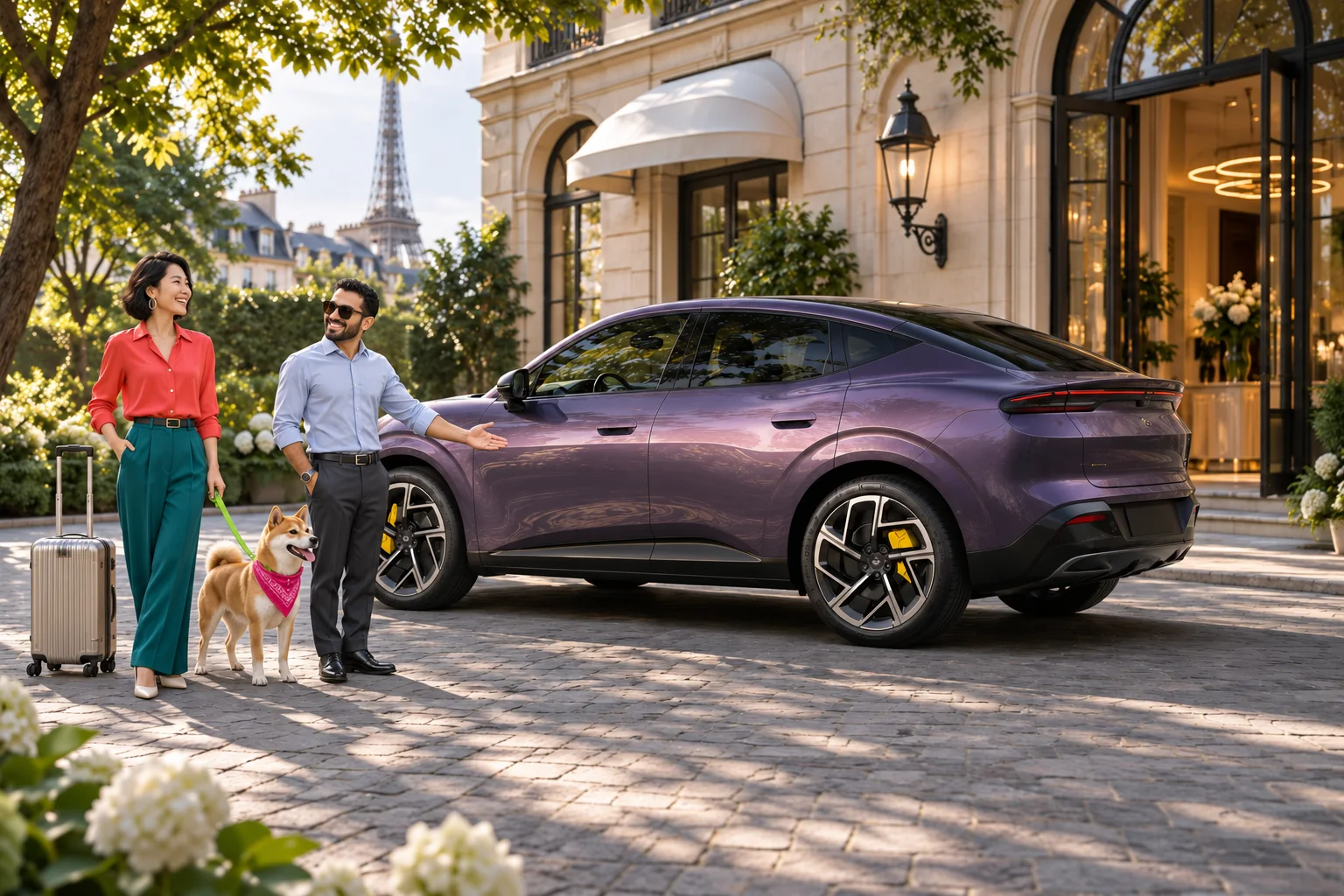
The XPENG L03 also appears in the French range. The manufacturer quotes a 367-litre rear boot and offers different comfort configurations. Its relevance here is mainly passenger accommodation on a journey with a small or medium-sized pet.
A bulky carrier and several suitcases call for closer loading checks. Comfortable seating alone cannot confirm a large crate: the carrier’s dimensions and number of occupants remain essential.
Manufacturers do not always measure quoted storage volumes in the same way. These figures are useful references, rather than a substitute for checking the load. Equipment varies with model year, version and market.
03 · The crate changes the choice
Van for pets: large crates and luggage
A van for pets becomes worth considering when the complete load exceeds a car’s usable space: a large assembled crate, several animals, passengers and numerous suitcases. For your pet taxi vehicle, the Mercedes V-Class illustrates this category. Choosing a van for dogs always depends on the full load, remaining seats and planned travel arrangement.
Assembled or dismantled: two different loads
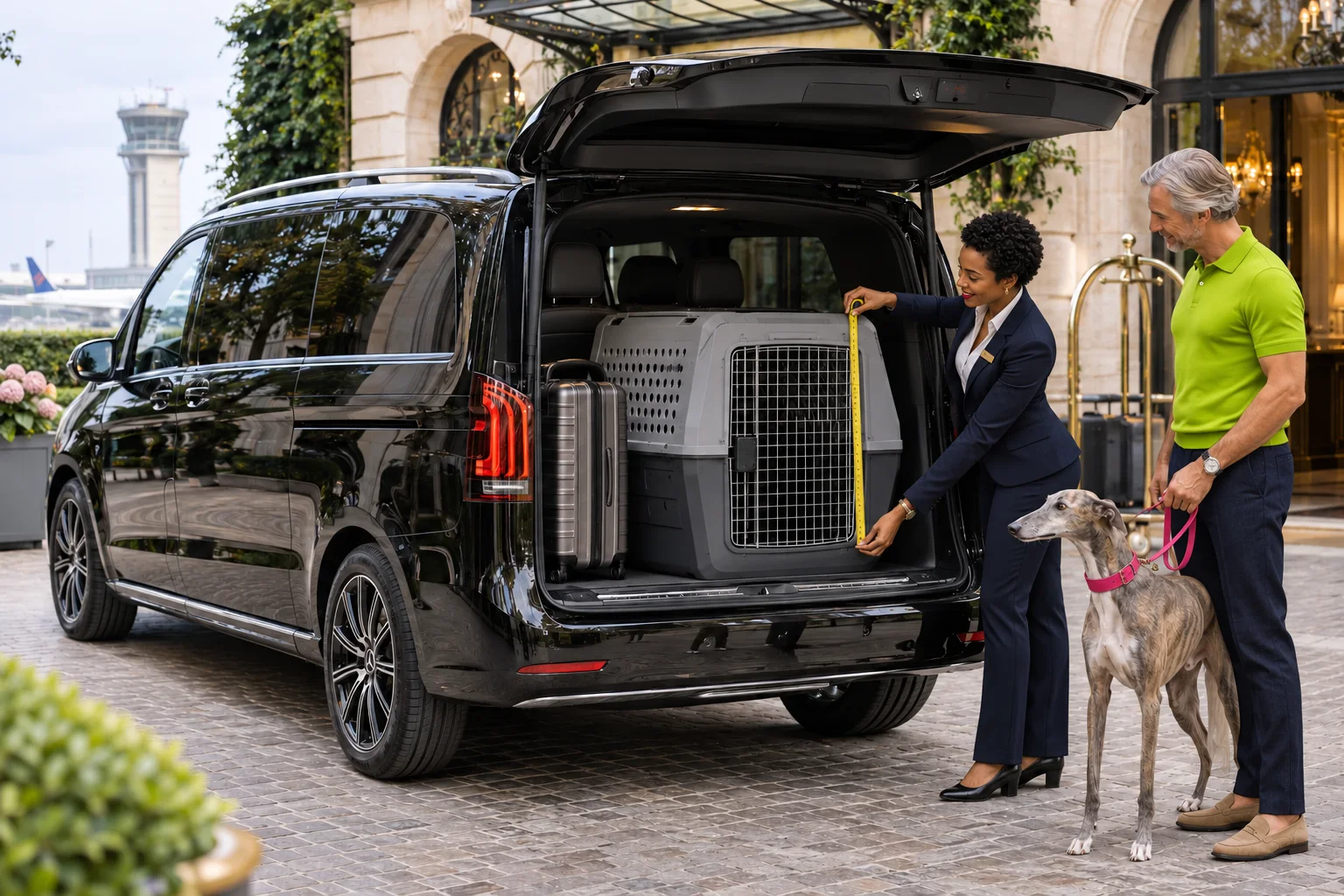
An assembled rigid crate retains its full height. If it can be dismantled and its two halves nest together, its loading footprint may shrink. That may make a car possible after checking, but it does not mean every dismantled XL crate fits every saloon.
Pet transport by van needs a plan for each animal’s arrangement during the road journey. A cat still requires a suitable closed carrier. Pet transport in crates for a flight and the arrangement during the road transfer are separate stages to prepare.
Measure external length × width × height, including handles and wheels. Side and front photographs, together with a picture of the luggage, help prepare the booking.
| Your situation | Category to consider | What to confirm |
|---|---|---|
| One medium-sized dog, one owner, light luggage | Confort car or SUV | Dog’s restraint, passenger places and suitcase sizes |
| One cat in a small carrier | Car if the complete load fits | Closed carrier dimensions and passengers |
| A dismantled crate with nesting halves | Car may be possible after checking | Dismantled dimensions and separate pet arrangement |
| Large assembled crate and several suitcases | Van usually worth prioritising | Opening, height, securing the load and remaining seats |
| A pet travelling without its owner | Dedicated animal transport | Carrier, instructions and handover contacts |
For an airport pet transfer, include every crate and suitcase. For a train station pet pickup, also provide the train details and meeting point so that access to the vehicle can be planned.
04 · Comfort takes preparation
Pet taxi vehicle: comfort and animal welfare on board
Manufacturers increasingly consider pets in their designs. Nissan presented the X-Trail 4Dogs concept; Volkswagen features dogs around the Tayron; Peugeot explores fittings through the E-5008 Dog Edition Concept. The Fondation 30 Millions d’Amis article also describes initiatives at JAECOO. A concept, an announcement and equipment available to buy are distinct situations.
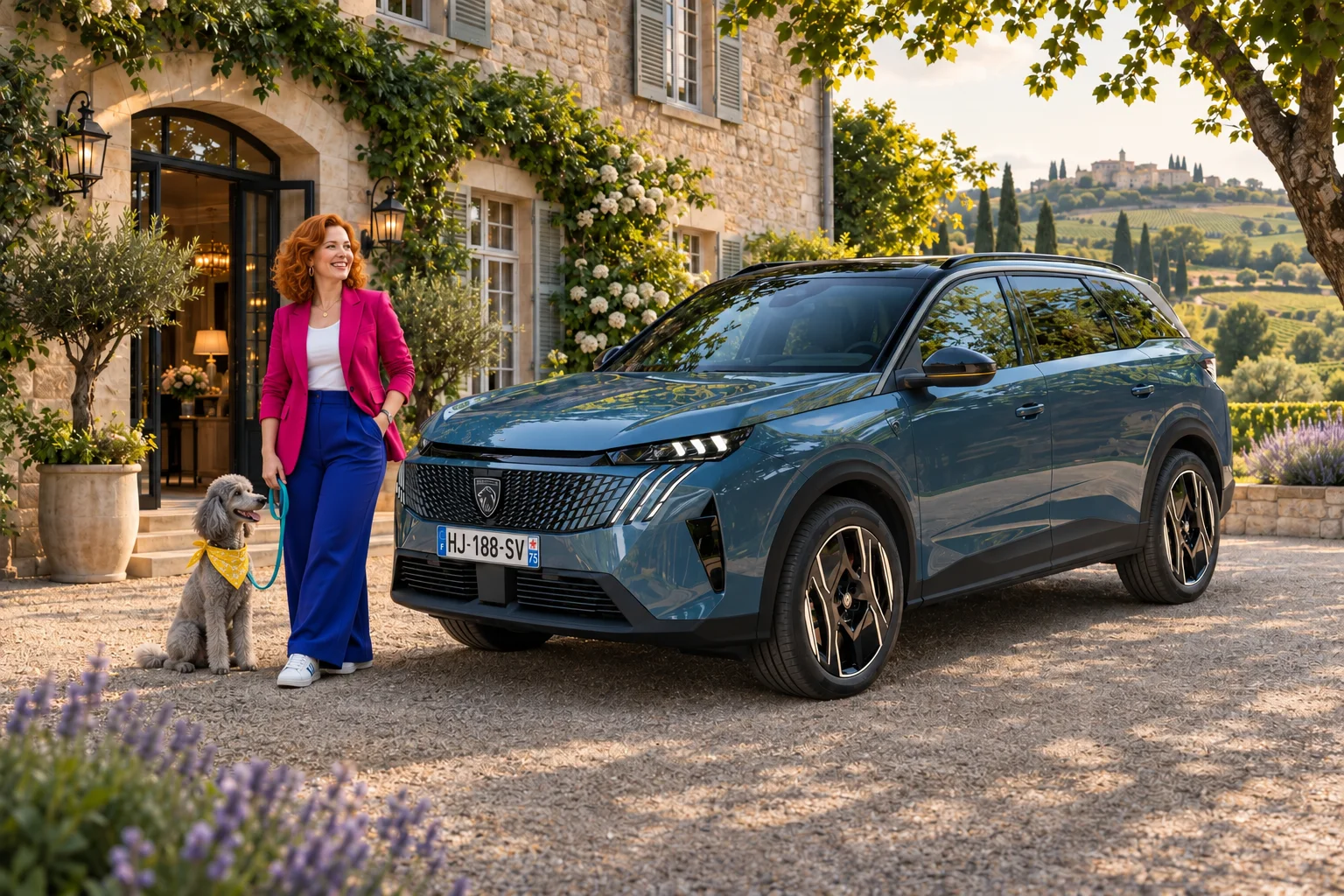
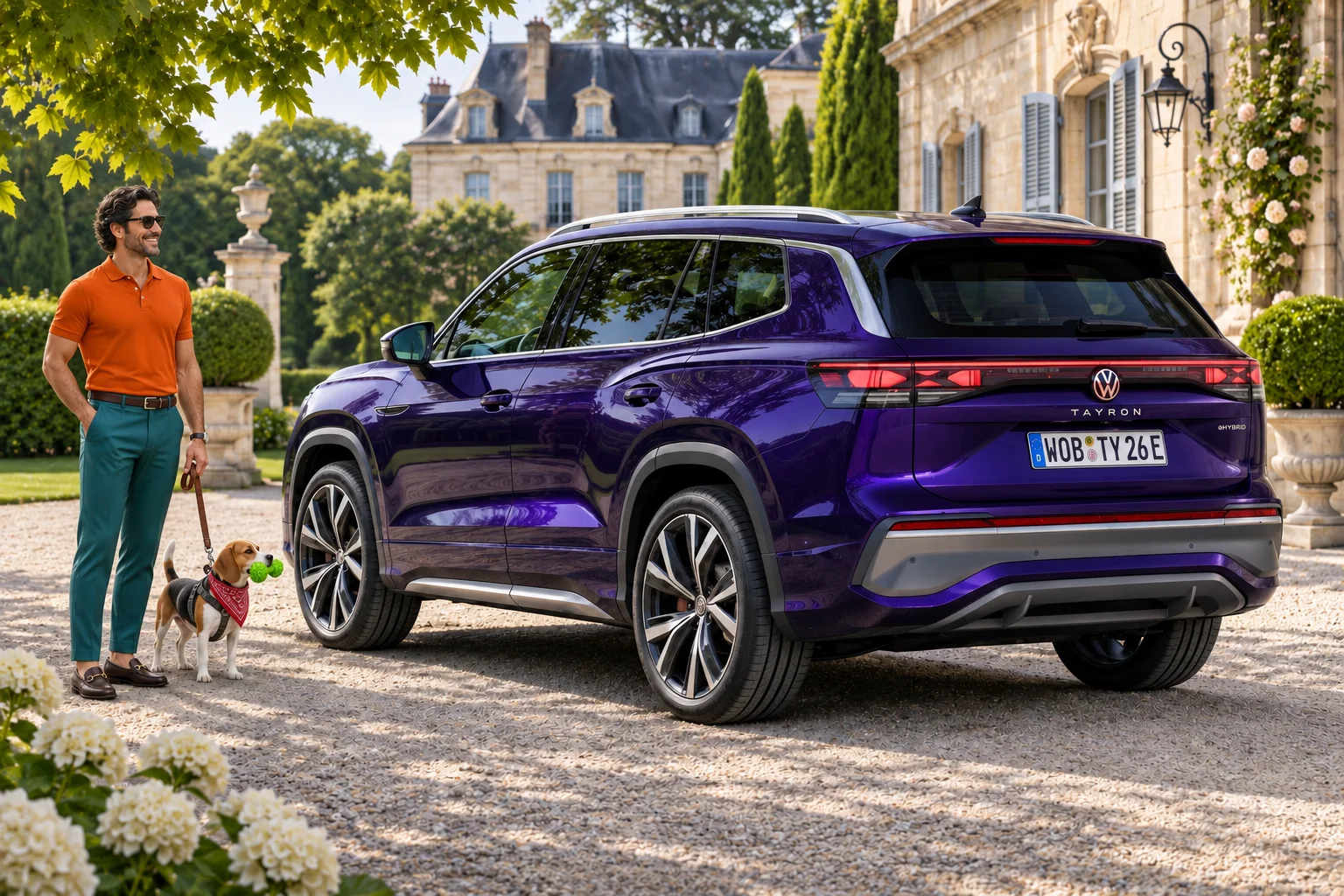
Our journey planning also draws on TAV training (transport of live animals): considering each animal’s needs, limiting stressful handling and adapting its travel arrangement. Comfort depends on the vehicle’s layout, the collection process and the way the journey is driven.
Cleanliness, cleaning and disinfection
A clean seat cover contributes to comfort, but hygiene also involves surfaces, carriers and the equipment used. Cleaning removes dirt; disinfection complements that preparation with suitable products used according to their instructions. Between journeys, these steps help limit the spread of germs. Protective covers and equipment should be clean and dry when the animal is settled in.
A stable carrier and secure access
For pet transport in crates, the carrier must suit the animal’s size, allow it to stand naturally, turn around and lie down, and be secured for travel. Luggage must neither press against it nor block ventilation openings. Dogs stay on a lead during loading and unloading; cats stay in closed carriers. Mention any difficulty getting into a vehicle so that the help needed can be planned.
Ventilation, temperature and supervision
In a pet taxi vehicle, air should circulate around the animal without an uncomfortable direct draught. The arrangement of carriers and suitcases matters alongside air conditioning. Temperature and sun exposure need attention during the journey and while waiting. Pet-related functions do not replace supervision: the arrangement should allow the animal to be checked and reached.
A calm collection to help reduce stress
An animal unfamiliar with cars may react to noise, handling or other animals nearby. Introducing the carrier beforehand, approaching gently and avoiding sudden movements can help make departure calmer. Tell us about your pet’s usual habits and reactions. If several animals travel together, their compatibility and arrangements must be considered; they are not automatically placed in the same carrier.
Smooth driving, water and suitable breaks
Anticipating braking and bends helps the animal remain stable. For long-distance pet transport, the route, water and breaks are planned around traffic, weather, age and individual needs. Any dog walk takes place on a lead in a secure location; a cat’s carrier should not be opened at the roadside.
Useful instructions before departure
A pet-friendly vehicle also needs planning around the animal’s condition and habits. Tell us if your companion is older, recovering, nervous or prone to travel sickness. For a veterinary transfer, share relevant instructions; veterinary advice may be needed if its ability to cope with the journey is uncertain. Collection and delivery contacts are prepared for any unaccompanied animal.
The price follows the agreed service
For your pet taxi vehicle, the category, addresses, timing and needs determine the quote. See our pet transport prices and prepare collection through our pages for pet taxis in Essonne 91 or pet taxis in Hauts-de-Seine 92.
Collection in Seine-et-Marne 77 or Yvelines 78 needs the same information about animals, carriers and luggage. Mention any access restrictions at the address before the vehicle is confirmed.
Sources checked on 9 November 2026: the Tesla Model Y and the XPENG France range. Manufacturer references do not confirm that a crate fits the booked vehicle.
Dedicated pet transport
Cargo van for pets: several crates without owners on board
A cargo van for pets is a pet transport vehicle dedicated to unaccompanied pet transport. This animal transport van allows options for transporting several pets in individual crates on one or two levels, within a purpose-built structure securely fixed to the vehicle.
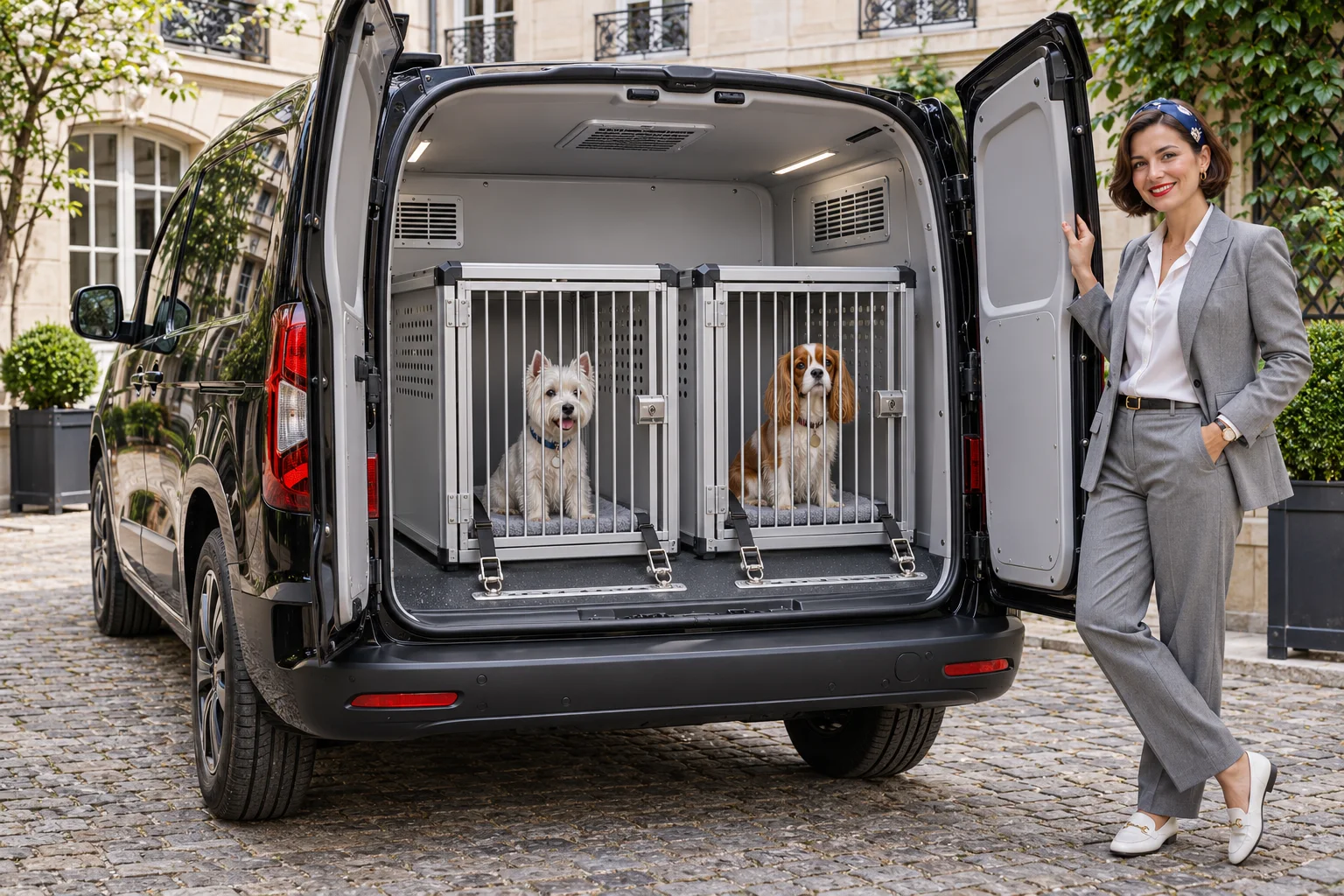
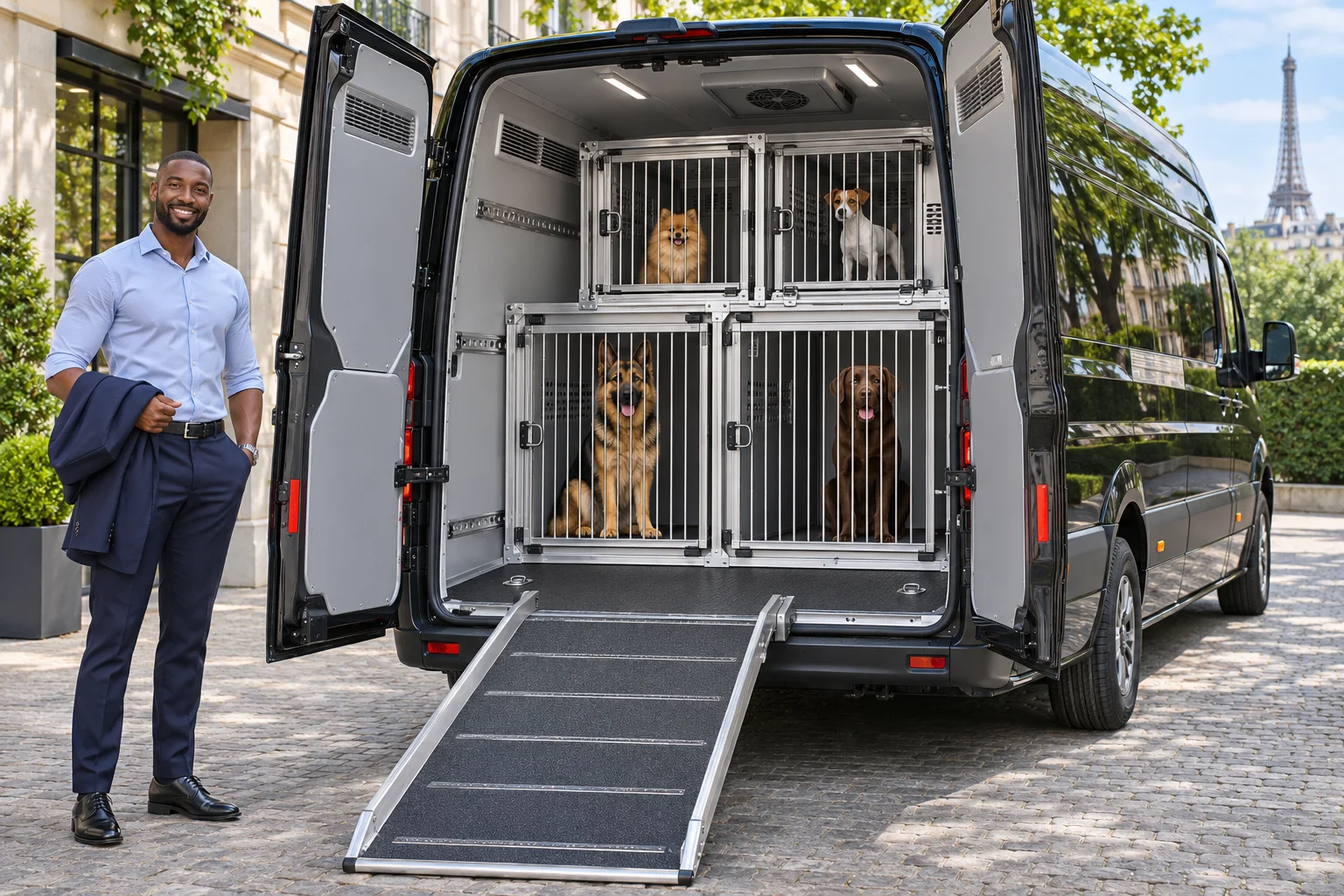
In an animal transport van, every crate must remain accessible, secured and properly ventilated. Pet transport in a cargo van needs suitable air renewal, monitored temperature and easy-clean surfaces. The number and arrangement of crates are confirmed around their dimensions, the animals’ size and compatibility.
Illustrative examples of conversions. The available vehicle, equipment and configuration must be confirmed when booking.
05 · Your questions
Pet taxi vehicle frequently asked questions
Can a Tesla Model Y take a large crate?
Your pet taxi vehicle is chosen around the crate’s external dimensions, hatch opening, occupied seats and luggage. The model name alone is insufficient: a van for pets may be more suitable for a large assembled crate.
Is the XPENG G6 only suitable for dogs outside crates?
No. Some crates may be suitable after measuring. The G6 can be considered for an accompanied journey with a medium-sized dog, a cat in a closed carrier or another arrangement that fits the complete load.
Could my dog travel in an XPENG L03?
It is an option to consider for an accompanied trip, subject to the planned restraint and usable space. Provide the breed, weight, passengers and belongings. A bulky crate needs specific checks.
Can I request a particular model?
Tell us your preference before booking. The make, version and availability require express confirmation; featuring a model in this article does not guarantee it will be assigned.
Will a dismantled XL crate fit in a car?
An XL crate may sometimes fit in a car for dogs if its two halves nest together. Give the dismantled dimensions and explain how the animal will travel. A van for dogs may be preferable for an assembled carrier. Pet transport by van is planned around every passenger, carrier and suitcase.
How do I choose when travelling with several pets?
Transporting several pets requires details of every animal, carrier and item of luggage. The number of animals alone does not determine the vehicle. A car for cats may suit a small carrier and light luggage, while several assembled crates often need more space. Our dog, cat and small-pet transport FAQ provides further practical information.
How does TAV training inform journey planning?
Training in the transport of live animals covers subjects including animals’ needs, handling, stress, hygiene and journey organisation. These considerations complement the vehicle choice: an attractive car is not enough unless the travel arrangement, collection process and journey suit the animal.
What should I mention if my pet is older or nervous?
Tell us its age, any difficulty getting into a vehicle or remaining settled, its usual behaviour in cars and any veterinary instructions relevant to the trip. This helps prepare loading, limit handling and consider the pace of the journey. Particular needs should be discussed before booking.
When should I choose pet transport in a cargo van?
A cargo van for pets suits unaccompanied journeys needing a dedicated space for crates. The pet taxi vehicle and conversion are confirmed around the animals’ number, size and needs; the illustrations do not guarantee a particular configuration for every booking.
06 · Let’s prepare your journey
Book your pet taxi vehicle
For your pet taxi vehicle, provide the collection and destination addresses, date and time, passenger count and each animal’s species, breed and weight. Add the dimensions of assembled or dismantled crates and list checked suitcases, cabin bags and oversized items.
For chauffeur-driven pet transport with the owner on board, include every passenger. For an airport or station journey, add the flight or train number. A photograph of the complete load helps prepare the vehicle. International travellers should include a WhatsApp number with the country code to make communication easier.
Also mention your pet’s age, any difficulty getting into a vehicle and its usual behaviour in cars. For an unaccompanied pet, provide the collection and delivery contacts and any instructions relevant to its care and handover.
The category and pet’s arrangement are confirmed before travel. Booking at least 12 hours ahead is recommended; immediate requests depend on availability.